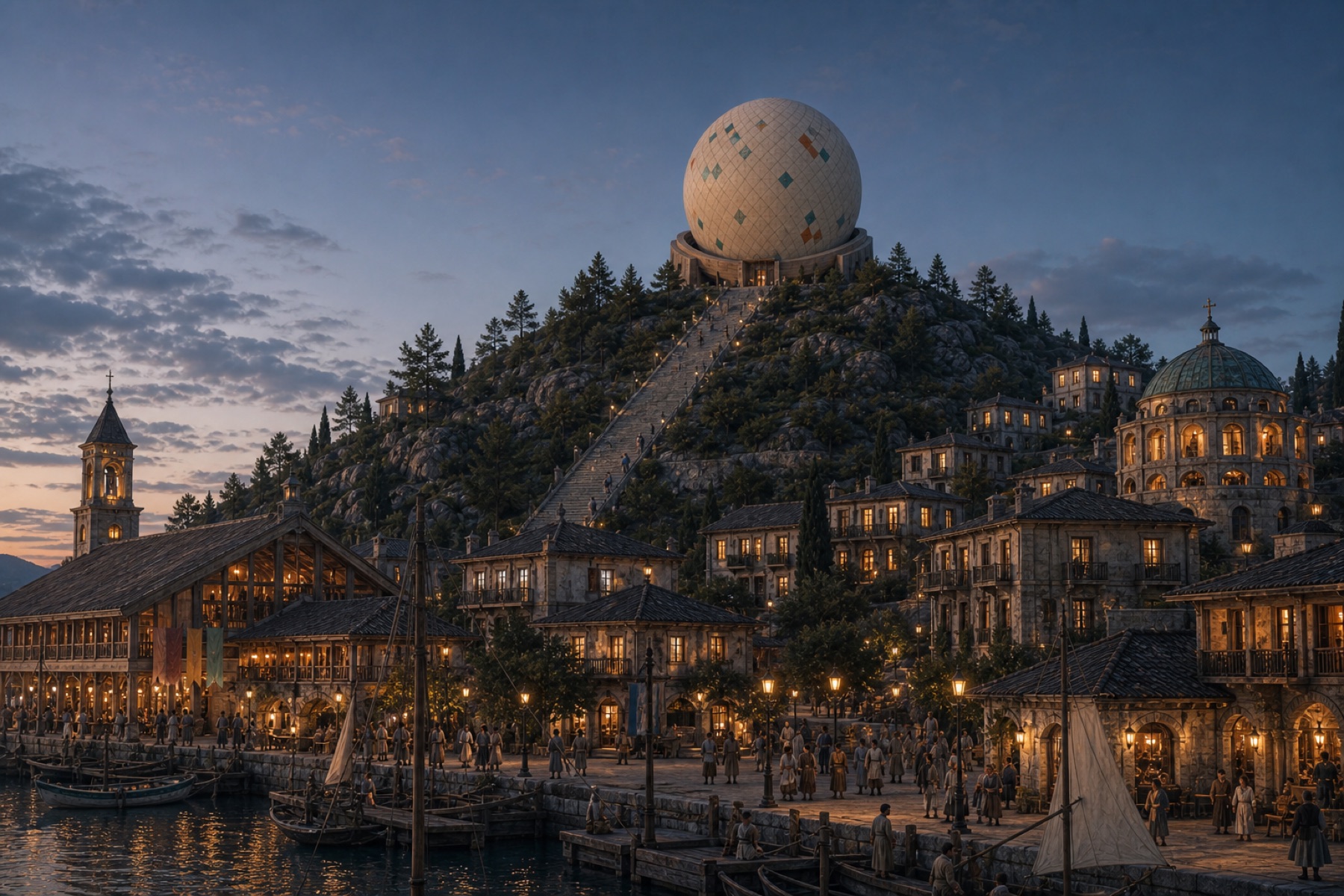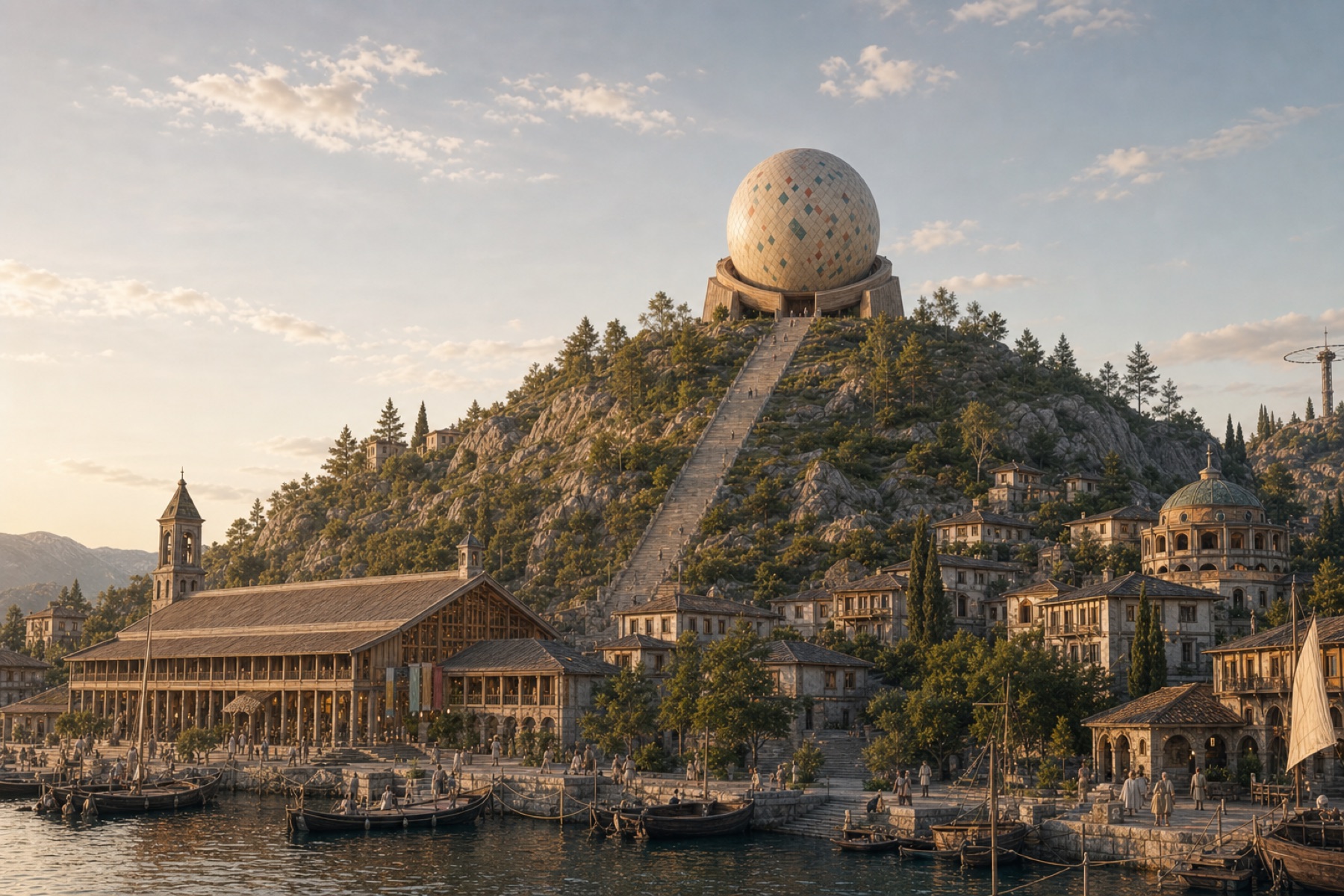
On its hill island northeast of the harbor stands the Starosphere, the great sphere of ceramic panels and timber ribs where the city administers itself and hosts the world. It is the ground half of the skyline's organizing saying: the sphere on the ground, the port in the sky. Deciding below, arriving above.
The sphere's skin is the city's largest mosaic: diamond cells, laid in the migration's own craft, a whole made of carried pieces. Like every mosaic in the belt it keeps its maker's flaws on purpose: the odd tile that breaks the palette, and the unfinished edge. The trellis being raised around the sun is the sky's mosaic, still being laid; the sphere is the same figure at civic scale. We are not done arriving.
What the sphere does for the city, the work-mosaic does for a household: on a kitchen slate or a workshop's wall panel, the day's delegated work renders as diamond cells filling themselves in, each tile a task some machine or Magus is carrying, laid as it completes. People glance at it the way farmers glance at weather. That is the culture's whole theory of command: not supervision, but a glance that trusts the bell to ring if it should. The short version a citizen would give of what the sphere is for: the sphere on the ground is where the world is commanded.