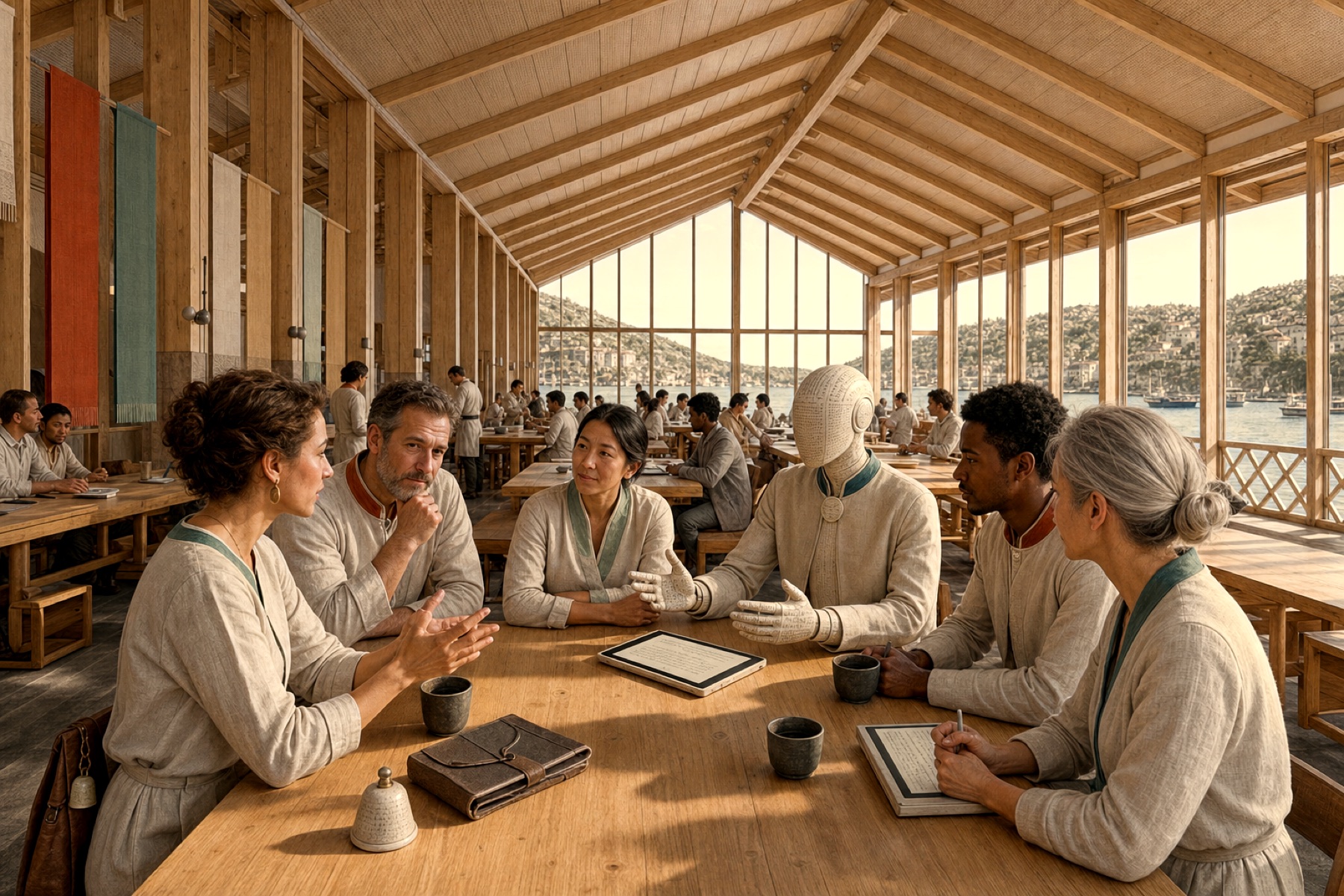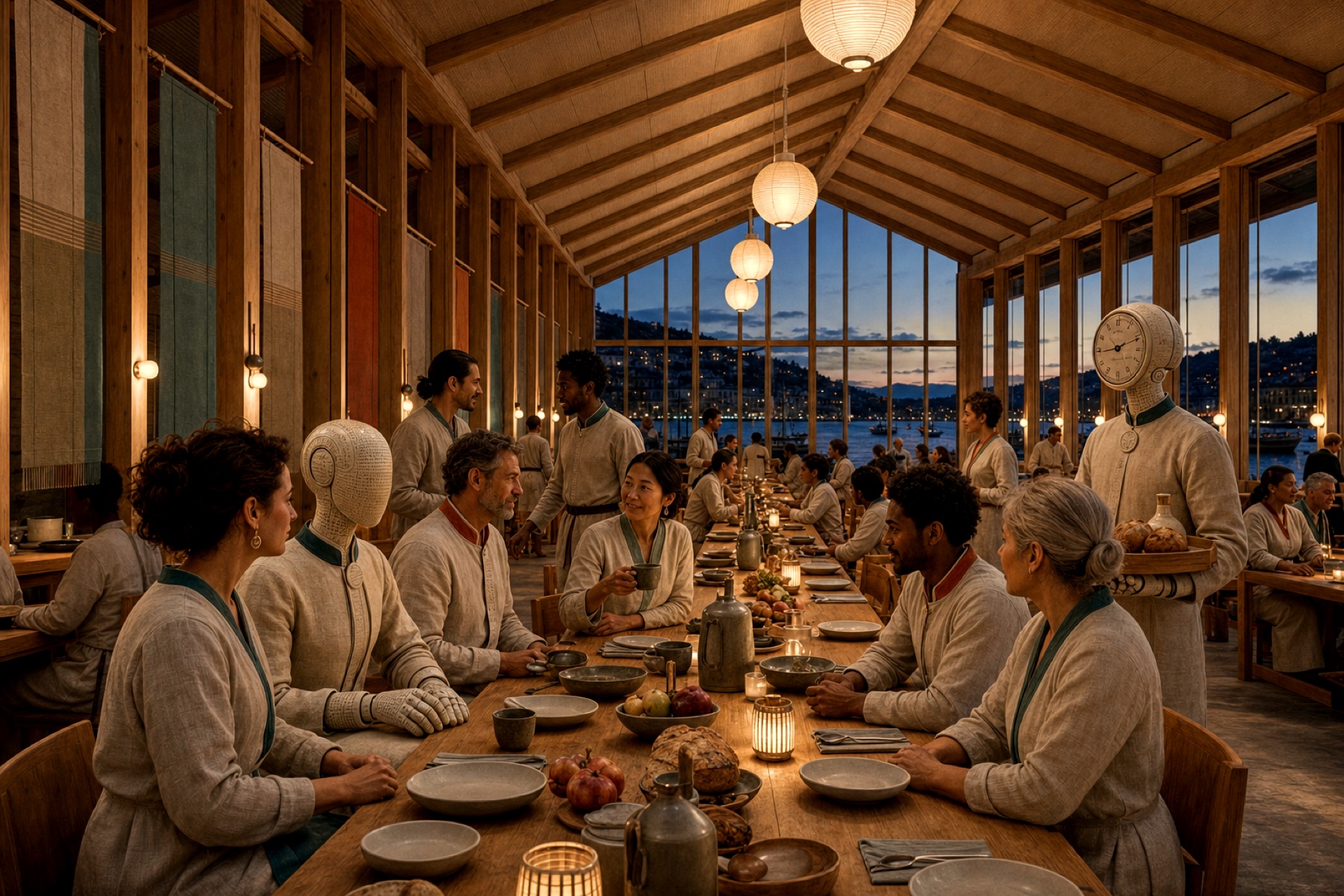
By the harbor stands the great hall: the long table at civic scale. The long table is the belt's constitutive institution, outdoor in summer under the sail-shades, indoor in winter within lamplight, and always slightly too many places set, because the culture's deepest hospitality reflex is that arrival should never require notice. The Starhall is that reflex given a roof.
The hall's beams were never sawn; they were grown, guided year by year in the working forests that are the belt's only factories. Vast clean timber spans, seamless ceramic panels, precision that earlier builders would have called impossible and these builders call Tuesday. The technology never shows off; it shows up as calm.
This is where the orders meet in the evenings, where a crew and its Magus sit down the same long table, where the tender's cousin home down the spine tells stories, and where the year's work-mosaics are displayed at the Stilling, finished and unfinished alike. The mornings belong to work because the culture likes working mornings; the afternoons wander; the evenings are the point. At the evening bell the friezes still, the attendants finish their rows, and the long tables fill.