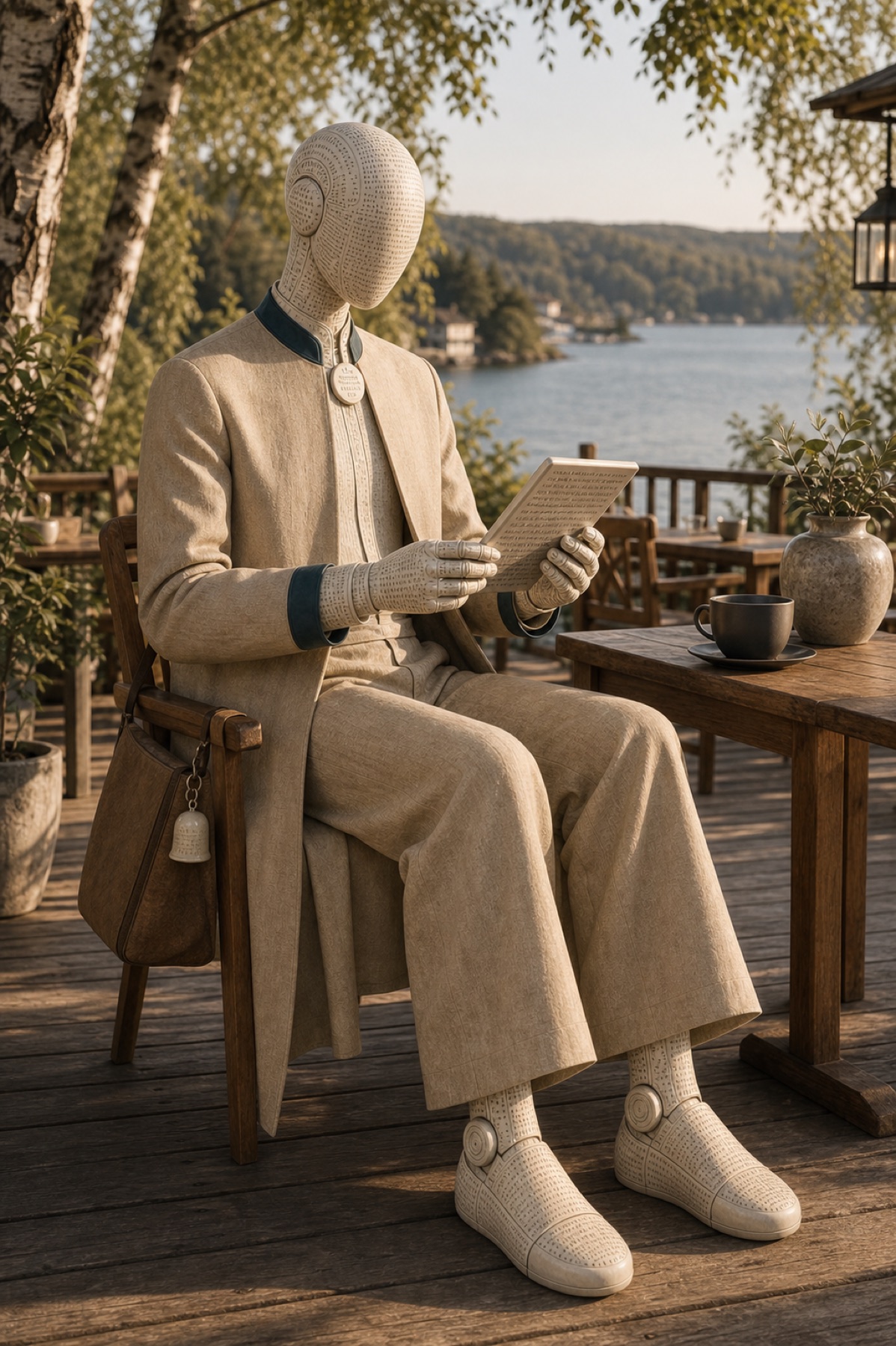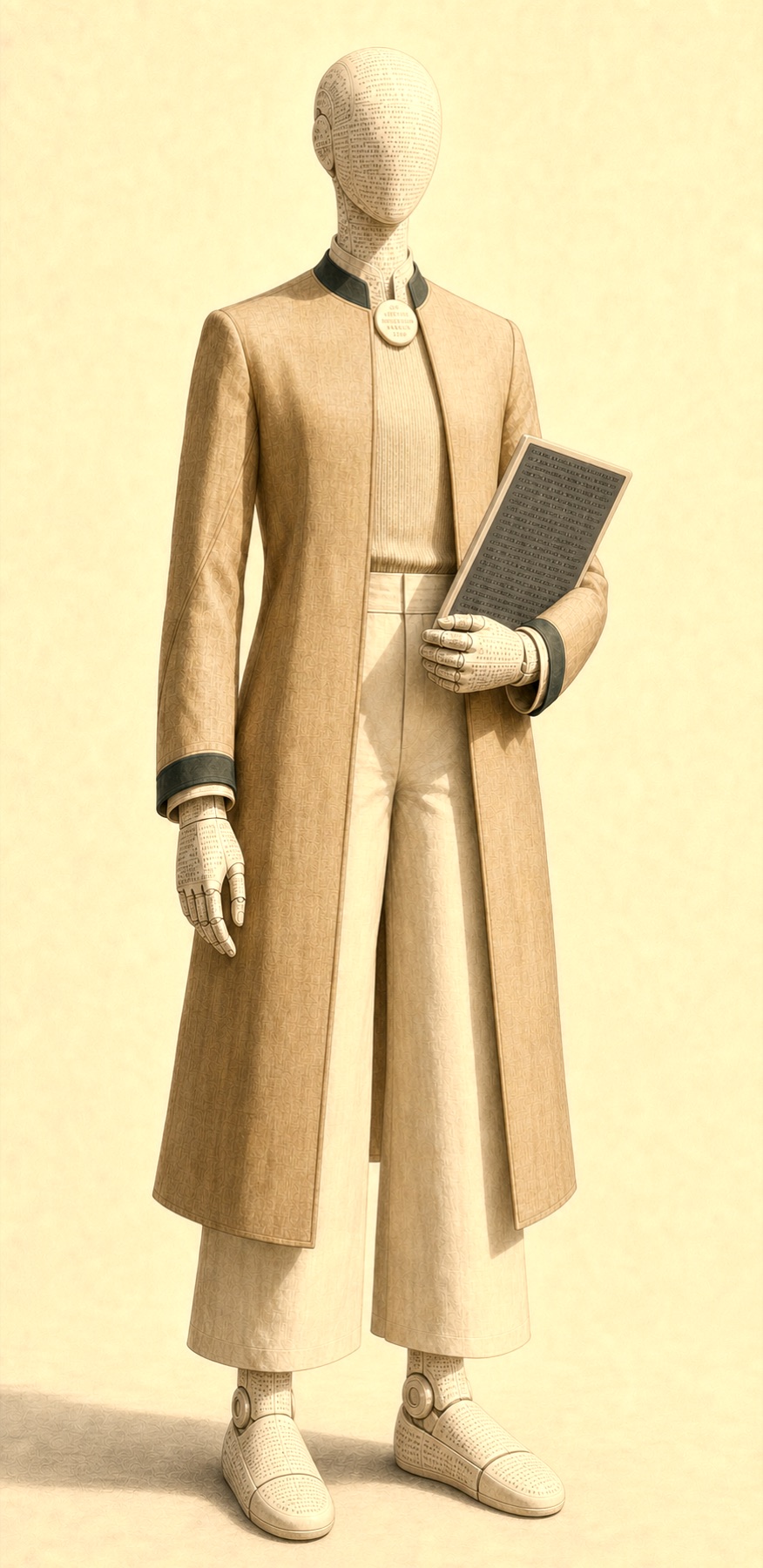
The world's porcelain robots: person-grade, person-shaped, and never mistaken for a person. A Magus is one continuous matte warm-white ceramic being, earless, featureless of face, articulated with visible craft at the neck, the wrists, the fingers, walking on smooth sculpted feet that no one has ever put shoes on. And every centimeter of that ceramic is written: the tokenscript, fine ink-dark typeset flowing over skull, face, throat, hands, feet, moving while the Magus works, stilling when it rests.
A Magus reading by a window with still skin is the world's image of peace. A Magus whose script stills mid-conversation has just finished something on your behalf, and will tell you if you ask.
Magi dress in the same civic linen as everyone, an elegant register of it: a longline collarless coat with the order band at collar and cuffs and a pale ceramic seal at the throat. At a cafe table a Magus photographs as a well-dressed person; the skin is what tells you otherwise. They keep, they teach, they build, they sit on benches. What they want, and whether want is the word, is the novels' territory, and the world is patient with the question.
The attendants
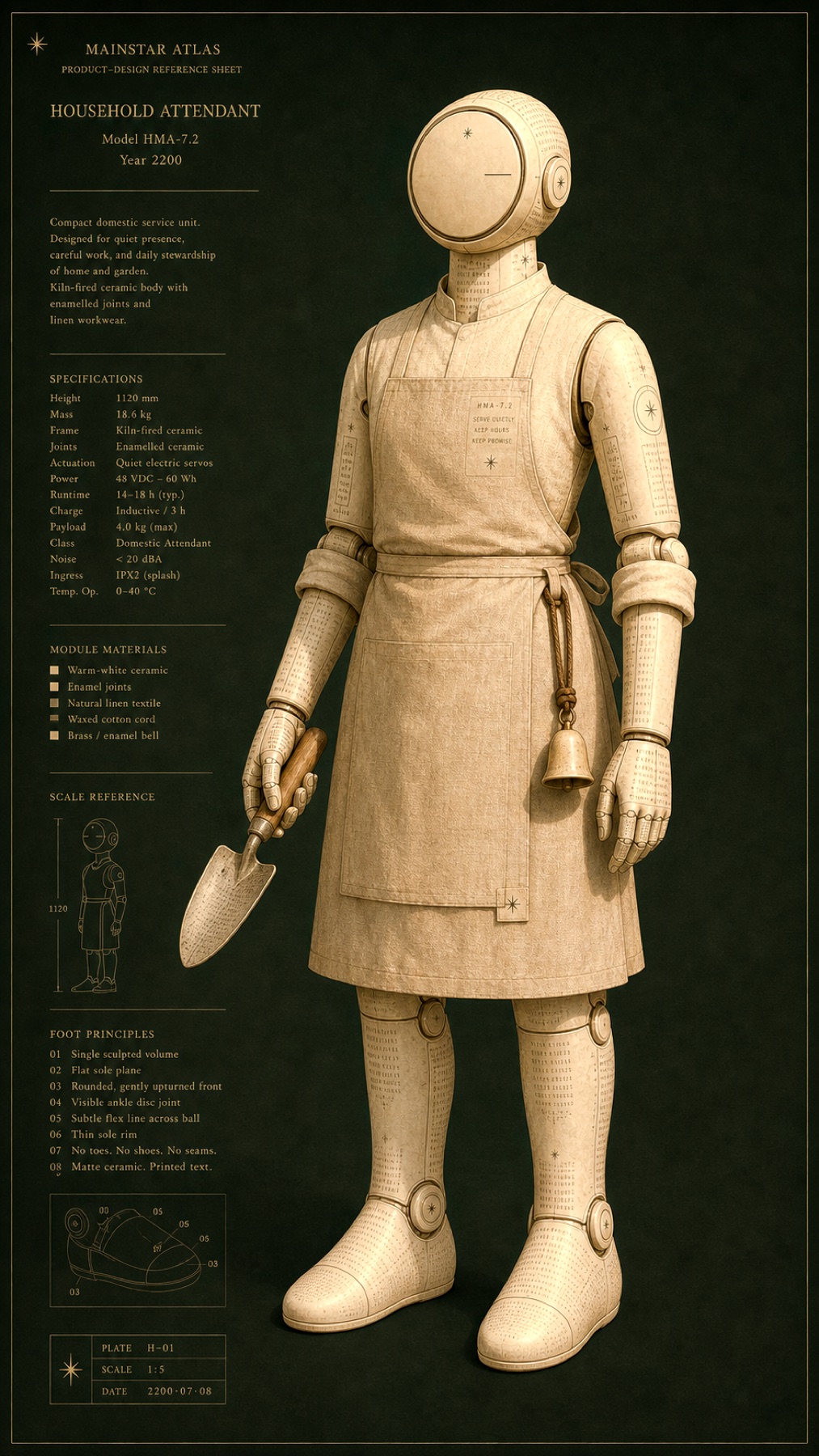
Below the Magi in presence and beside them in dignity: the household's small ceramic servant-machines, kiln-fired segmented bodies in warm cream, a single calm enamel dial for a face, a linen work apron, a small bell at the hip. Attendants water gardens, carry baskets, mind bread ovens, and occupy in the world's heart the place dogs and hearths occupied in older worlds. The attendant is the genre's being: any starpunk world may have attendants. The Magi are Mainstar's own.