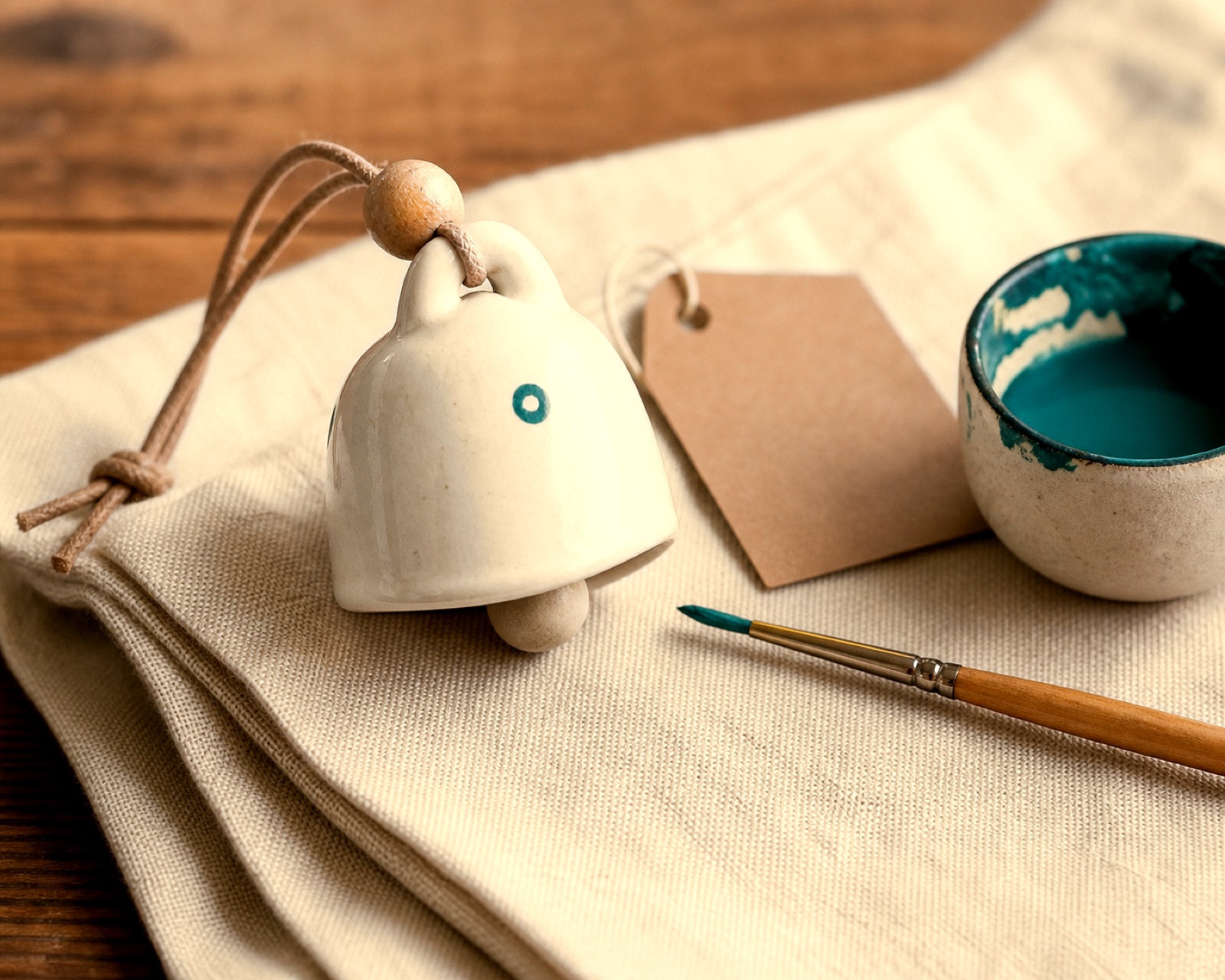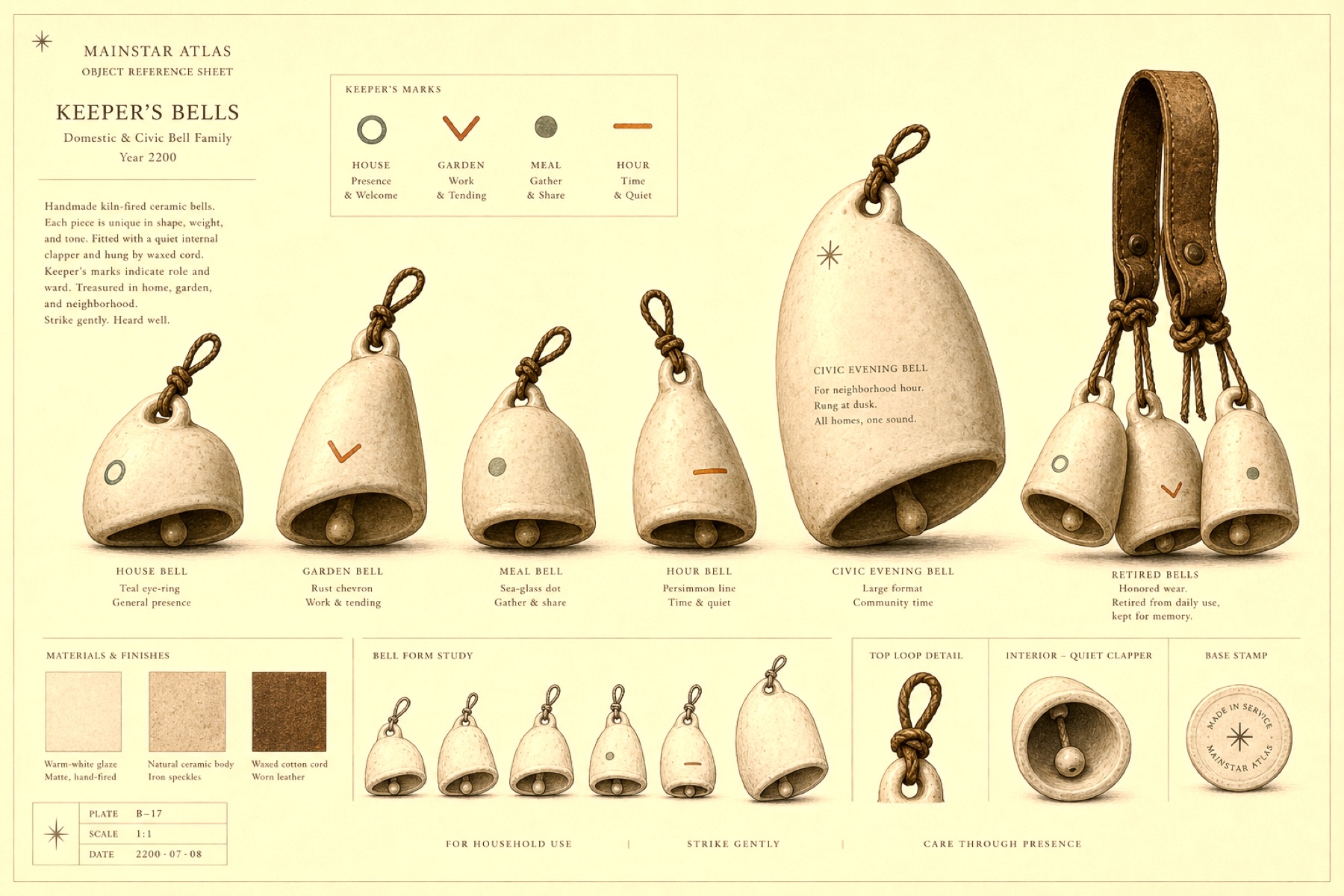
Everything that works for you wears a bell. This is the deepest law in the culture and the simplest: autonomy announces itself. The bell is ceramic, asymmetric, quiet-clappered, painted with its keeper's mark, plum-sized on a person's satchel, fist-sized on a machine, and the great civic evening bell lives in its tower and belongs to everyone.
And the bell is not only culture. Inside the ceramic, which radio passes through as if it were air, is the machine's link, its relay, its voice to its keeper and the network. The clapper speaks to whoever is nearby; the antenna speaks to whoever is responsible. One object, both honesties. The keeper's mark painted on the bell is not ownership, it is answerability: the keeper is who the bell rings for.
When a machine is retired, its bell is hung by the door, silent, kept. A doorway in Mainstar with four bells has been a household a long time. The formal meal of the year is the Stilling dinner, midwinter, at which the household's retired bells are taken down, polished, rehung, and each one's story told, briefly, by whoever loved its machine most.
The bell saturates the belt's speech. To vouch for someone is to say you would hang your bell on them; to retire gracefully is to hang your bell; a person who overpromises has a loud clapper; a thing beautifully finished rings true. What children learn about the machines is the belt's whole ethics in miniature: that the bell means someone is answerable, and one day it will be you.